
The Shingrix vaccine against shingles is based on a two-dose schedule. After the first dose, most vaccinated individuals know what to expect. The second dose, however, often causes more pronounced reactions. Understanding the profile of these side effects allows for better preparation and helps avoid abandoning the vaccination schedule.
Local and systemic reactions after Shingrix: first dose versus second dose
Pharmacovigilance data and clinical feedback converge on one point: the side effects after the second dose are on average more intense than those observed after the first injection. The type of reaction remains the same, but their frequency and duration increase slightly.
| Type of reaction | After the 1st dose | After the 2nd dose |
|---|---|---|
| Pain at the injection site | Very common | Very common, often more pronounced |
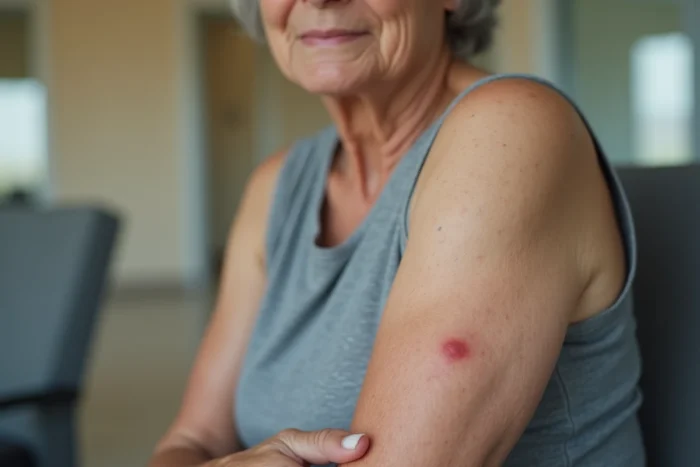
| Redness and swelling of the arm | Common | Common, sometimes more extensive |
| Fatigue | Common | More common and more pronounced |
| Muscle pain | Common | Common, increased intensity |
| Headaches | Common | Common |
| Fever | Uncommon | More common than after the 1st dose |
| Chills | Uncommon | More common |
This table reflects the trends observed in the ZOE-50 and ZOE-70 clinical studies conducted on adults aged 50 and older. Systemic reactions (fatigue, fever, myalgias) are those that show the clearest difference between the two doses.
One point to remember: these manifestations reflect the activation of the immune system. The AS01B adjuvant contained in Shingrix stimulates a robust cellular and humoral immune response, which explains the more pronounced reactions compared to other inactivated vaccines. Most symptoms resolve within two to three days after the injection.
To better understand the side effects of the shingles vaccine 2nd dose, it is important to distinguish between what is temporary discomfort and what warrants medical advice.

Guillain-Barré Syndrome and the second injection: what the data shows
Among the rare adverse effects monitored after vaccination with Shingrix, Guillain-Barré syndrome has received particular attention. An American pharmacovigilance study involving over two million people aged 65 and older who were vaccinated allowed for precise measurement of this risk.
The result is worth highlighting. The increased risk of Guillain-Barré syndrome was only detected after the first dose, estimated at about six additional cases per million doses in the six weeks following the injection. After the second dose, no excess risk was identified.
This distinction between the first and second dose is rarely detailed in French public content. However, it changes the interpretation of the benefit-risk ratio for individuals hesitant to receive their second injection due to fear of worsening. The data indicates the opposite: the safety profile of the second dose reveals no new type of serious effect compared to the first.
Why the second Shingrix dose causes stronger reactions
The intensification of reactions after the second injection is explained by the very mechanism of the vaccine. During the first dose, the immune system encounters the glycoprotein E (gE) antigen of the varicella-zoster virus, combined with the AS01B adjuvant. It produces specific T lymphocytes and antibodies.
During the second injection, these memory cells react faster and more strongly to the antigen. This amplified response generates more inflammatory mediators, resulting in more pronounced fatigue, more intense muscle pain, and sometimes fever.
This phenomenon is not unique to Shingrix. It is observed with other multi-dose vaccines. The difference lies in the potency of the AS01B adjuvant, which combines two components (MPL and QS-21) designed to maximize the cellular immune response, particularly in older individuals whose immunity naturally declines.
Practical management of side effects after the second shingles dose
Several health authorities, including those in Australia, recommend planning a simple adjustment after the second injection. The most bothersome reactions occur within 24 to 48 hours.
- Avoid scheduling a work appointment or intense physical activity the day after the injection
- Apply a cold compress to the arm to alleviate local pain and swelling
- Take a common pain reliever (paracetamol) in case of fever or muscle pain, after consulting your doctor or pharmacist
- Monitor symptoms beyond three days: persistent pain, high fever, or swelling that extends warrant a consultation
Planning one to two days of margin after the second dose remains the most pragmatic advice. The majority of vaccinated individuals resume their normal activities within 72 hours.
When to consult after the second injection
Common reactions do not require a consultation. However, progressive muscle weakness, breathing difficulties, or an allergic reaction (widespread hives, facial swelling, difficulty swallowing) necessitate immediate medical advice. These situations remain exceptional.
Abandoning the second dose: an underestimated risk
The intensity of reactions after the first injection leads some individuals to forgo the second dose. This incomplete schedule significantly reduces protection. The ZOE-50 and ZOE-70 studies have demonstrated the effectiveness of Shingrix based on a complete two-dose schedule, administered two months apart (with possible flexibility between two and six months).
An incomplete vaccination schedule offers significantly lower protection against shingles and post-herpetic neuralgia. The second dose consolidates the cellular immune response, which protects against the reactivation of the varicella-zoster virus in the long term.
The more pronounced reactions after the second injection do not signal an increased danger. They reflect a functional immune memory, exactly what the vaccine aims to produce. Renouncing the second dose out of fear of temporary effects amounts to sacrificing the main benefit of vaccination.