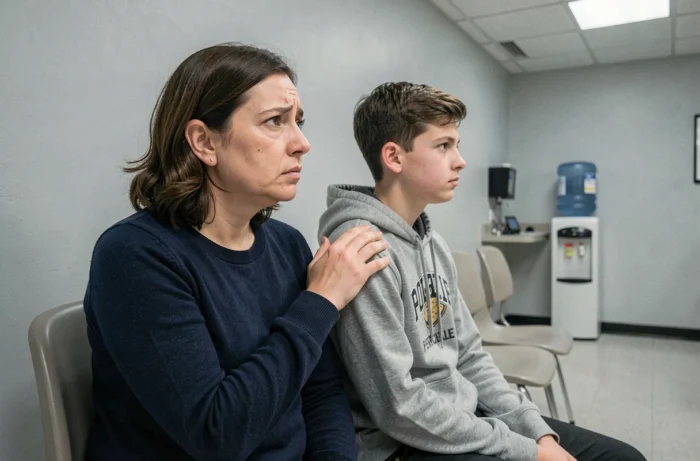
Your child has just been taken into custody and you receive a call from the police station. The instinct is to want to join them immediately, to understand what is happening, to protect them. French law provides specific guarantees for parents in this situation, but also limits that must be known to act effectively.
Being informed does not mean attending the minor’s hearing
The first thing to know: law enforcement is required to notify legal representatives as soon as a minor is subject to a voluntary interview, detention, or police custody. This information pertains to the measure itself, its reasons, and certain rights of the minor.
But being informed does not grant an automatic right to enter the interview room. During the interrogation, it is the lawyer who assists the minor, not their parents. You can go to the police station, ask for news, but the physical presence alongside the child during questioning is the lawyer’s responsibility.
This distinction often surprises families. You can consult Petites Graines for advice on how this process unfolds in practice and on the reflexes to adopt as soon as you are notified.
Mandatory lawyer in police custody: what parents need to decide quickly
During police custody, the assistance of a lawyer is mandatory for a minor. The young person cannot waive this right, unlike an adult. If neither the minor nor their legal representatives appoint a lawyer, a court-appointed lawyer is automatically requested.
The choice usually falls to the parents. In practice, when the police station calls you, the question of the lawyer is one of the first decisions to make. You can appoint a lawyer you know, or let the bar appoint one.
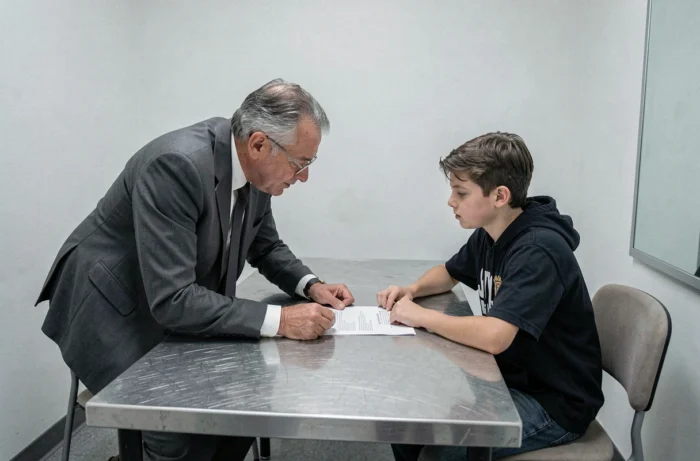
In a voluntary interview, the situation is different. The minor can be heard without a lawyer, unless they request one or their parents ask for one on their behalf. Since the voluntary interview is a less restrictive measure (the minor can leave the premises), the guarantees are lighter. Requesting the presence of a lawyer remains possible and recommended.
Detention of minors under thirteen years old
A child aged ten to thirteen cannot be placed in police custody. The only applicable measure is detention, which can only be decided exceptionally by a judicial police officer, with the agreement of the public prosecutor.
Detention is only possible if the alleged offense is punishable by at least five years in prison. It must also be the only means to achieve one of the objectives set by law: to continue the investigation, ensure presentation before a judge, prevent the destruction of evidence, or pressure on witnesses.
When a parent cannot intervene: the appropriate adult mechanism
What happens if a parent is also involved in the facts alleged against the minor, or if there is a conflict of interest between the child and their legal representatives?
French law provides that an appropriate adult can be designated. This mechanism allows a trusted person, other than the parents, to be informed of the procedure and accompany the minor. This recourse also applies when the legal representatives are unreachable.
This point is rarely mentioned, even though it covers real situations: a parent in police custody themselves, a parent abroad without means of rapid communication, or a family context in which the minor’s interest requires separation.
Audiovisual recording of the hearing and concrete rights of the minor
Interrogations of a minor in police custody are subject to a mandatory audiovisual recording. An exception exists if a technical problem prevents recording, but this is rare. This recording constitutes an important guarantee: it can be viewed by the lawyer and used before the judge.
Beyond the recording, the minor has specific rights from the beginning of the measure:
- The right to know the qualification of the alleged facts, their date, and their presumed location
- The right to notify their legal representatives and to speak with a lawyer before any hearing
- The right to remain silent, which must be communicated to them at the beginning of the procedure
The parents receive the same information as the minor regarding the nature of the measure and the rights that arise from it.
What parents can demand
Even without access to the interview room, legal representatives have concrete levers:
- Request the appointment or change of lawyer for the minor
- Demand a medical examination if the child’s health justifies it
- Be informed of each extension of police custody and its reasons
- Challenge the regularity of the procedure before the public prosecutor

The most effective posture for a parent in this situation is to focus on two immediate actions: ensuring that a lawyer intervenes quickly and verifying that the minor has been informed of all their rights. The legal framework protects the minor at every stage, but these protections only work if someone ensures their effective application.