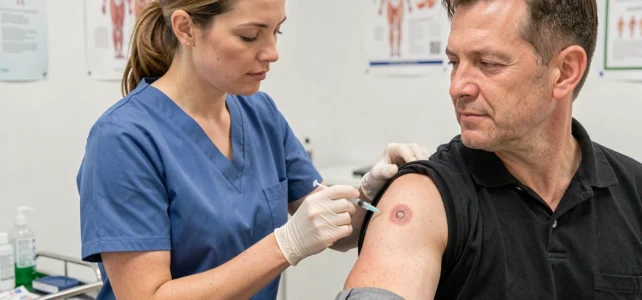
Some vaccines use live attenuated microorganisms, injected into the superficial layers of the skin. This technique causes an intense local inflammatory reaction, which sometimes leaves a permanent scar.
Two vaccines are primarily concerned: the BCG (against tuberculosis) and the old smallpox vaccine (against smallpox). The round and slightly depressed mark that millions of people have on their left arm results from a precise biological mechanism related to how the immune system responds to these vaccination preparations.
Intradermal injection and local inflammatory reaction
Most common vaccines (diphtheria, tetanus, hepatitis B) are injected into the muscle, deeply. The BCG, however, is administered by intradermal route, within the very thickness of the skin. This technique places the vaccine directly in contact with the resident immune cells of the dermis.
The BCG contains a live attenuated strain of Mycobacterium bovis. Once injected, this bacillus multiplies locally for several weeks. The immune system identifies these bacteria and triggers an inflammatory response at the injection site. A papule first appears, followed by a small weeping ulcer, and then a scab.
Healing of this ulcer generally takes several months. The skin tissue destroyed by the inflammation is replaced by fibrous scar tissue, resulting in the characteristic round scar of the BCG. The depth and duration of the reaction explain why the mark remains visible decades later.
The question of the BCG vaccine mark on the arm often arises among parents who discover this scar on their child or themselves, without always understanding its origin.
Smallpox vaccine: a disappeared scarification technique
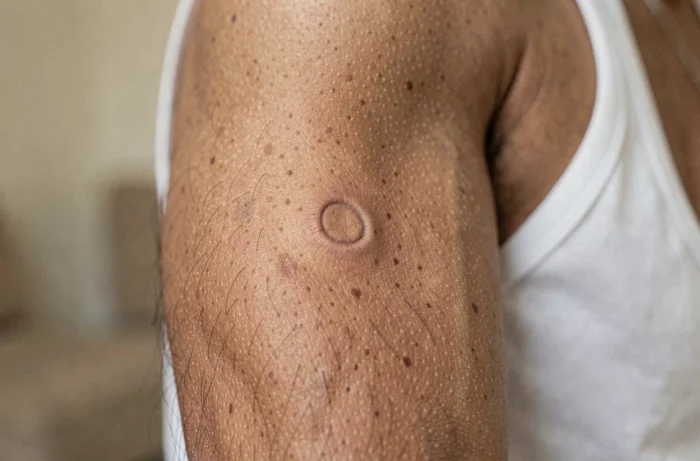
The smallpox vaccine, used extensively until the eradication of the disease in the late 1970s, left a scar through a different mechanism. Inoculation was not done with a conventional syringe, but with a forked needle that the vaccinator pricked several times into the skin, over a limited area of the arm.
This scarification technique created a series of micro-perforations through which the vaccinia virus (a weakened cousin of the smallpox virus) penetrated the epidermis. A pustule formed, evolved into a fluid-filled vesicle, and then into a thick scab. The area could remain inflamed and painful for two to three weeks.
The scar left by the smallpox vaccine is often wider and more irregular than that of the BCG. It may have a slightly raised or, conversely, depressed appearance, depending on the individual response of each person. Individuals born before the end of the smallpox vaccination campaigns frequently bear this mark on the upper arm.
Absence of BCG scar: what it really means
A lesser-known point deserves special attention. Many parents worry when no scar appears after their infant’s BCG vaccination. This concern is based on a misconception: the belief that the absence of a visible mark would indicate a vaccination failure.
Updated medical recommendations are clear on this subject: the absence of a scar does not mean the vaccine did not work. The effectiveness of the BCG is not correlated with the presence or size of the scar on the arm. Some individuals develop a protective immune response without leaving a visible trace on the skin.
These same recommendations specify that revaccination with BCG in the absence of a scar is not justified. No additional benefit has been demonstrated, and a second injection carries an increased risk of more severe local reactions. The scar is a witness to the skin reaction, not a reliable indicator of immune protection.
Why modern vaccines do not leave scars
Vaccines developed over the past few decades use techniques that avoid this destructive skin reaction. Several factors explain the difference:
- The route of administration has changed. Current vaccines are injected intramuscularly, at a depth where the inflammatory reaction does not affect the visible layers of the skin.
- Modern preparations contain purified antigens, recombinant proteins, or inactivated viruses, which do not replicate at the injection site. Without local multiplication of the pathogen, there is no prolonged tissue destruction.
- The adjuvants used today (aluminum salts, for example) stimulate the immune system in a targeted manner, without causing ulceration or skin necrosis.
The BCG and the smallpox vaccine belong to a generation of vaccines that intentionally exploited a strong local reaction to achieve lasting immunity. This approach, effective against tuberculosis and smallpox, had the downside of forming a permanent scar.

Vaccine scar and individual skin type
The size and appearance of the scar vary significantly from person to person. Several individual skin factors come into play.
Individuals predisposed to keloid scars (excessive, thick, and raised scar tissue) may develop a more prominent mark after the BCG. This type of pathological scarring affects certain populations more frequently and can transform a small expected mark into a large scar.
The age at the time of vaccination also plays a role. An infant’s skin, thin and still maturing, reacts differently than that of an adult. The depth of the injection, the vaccine strain used, and even the technique of the operator influence the final result.
- Vaccine strain: some strains of BCG cause more pronounced local reactions than others
- Injection depth: an injection that is too superficial or too deep alters the intensity of the reaction
- Genetic background: the healing capacity varies among individuals, regardless of the vaccine itself
These vaccine scars remain witnesses of a time when protection against serious diseases involved a direct confrontation between the skin and a living microorganism. Current vaccination techniques have rendered this type of mark obsolete for new generations, without diminishing the effectiveness of the vaccines administered today.