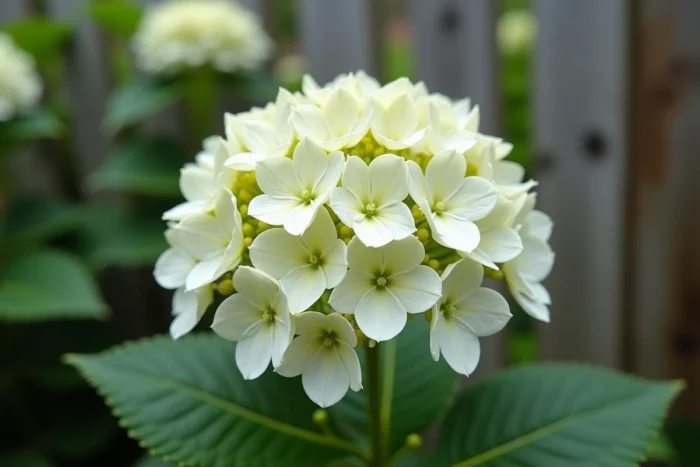
A white hydrangea turning green is not necessarily a sick hydrangea. In the white varieties of Hydrangea macrophylla or paniculata, this color change is part of the natural cycle of the flower, much more than an alarm signal related to the soil or watering. The phenomenon remains poorly understood by many gardeners because it is confused with other problems (chlorosis, iron deficiency, excess lime) that affect the foliage rather than the inflorescences.
pigments and sepals: what really colors a white hydrangea
Hydrangea flowers are not petals in the strict sense. What we perceive as the flower is actually a set of sterile sepals, modified bracts whose color depends on specific pigments. In blue and pink varieties, it is the anthocyanins that react to the soil pH and the presence of aluminum.
In white hydrangeas, the situation is different. These cultivars produce little or no anthocyanins. Their whiteness comes from a near-absence of pigment, combined with the cellular structure of the sepals that reflects light. As the flower ages, the chlorophyll naturally present in the tissues takes over: the green that appears is the base color of the sepal, not a defect.
To understand the reasons for a white hydrangea turning green, it is necessary to distinguish this normal end-of-cycle greening from an early greening, which may indicate environmental stress.
Selected white hydrangea varieties for greening
Several recent cultivars of Hydrangea paniculata have been specifically selected to offer a sequence of colors throughout the season. The transition from white to light green, then to cream or pink, is part of their varietal identity. It is a marketing argument, not a defect.
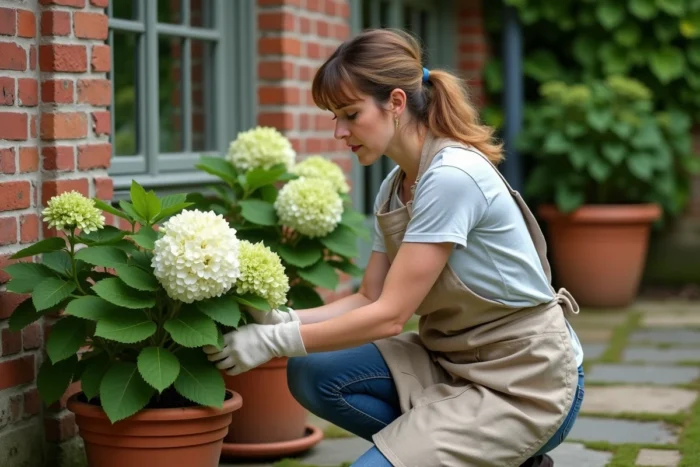
The paniculata ‘Polestar’, for example, starts as a greenish white before turning cream and then pink. The famous ‘Vanille Fraise’ transitions from cream white to raspberry pink. In these cases, the greening is genetically programmed and cannot be corrected by soil amendment or a change in exposure.
This confusion between natural greening and pathological greening leads many gardeners to unnecessarily modify the pH of their soil or add fertilizer, which can worsen the situation instead of resolving it.
Thermal stress and exposure: when greening occurs too early
Outside of the normal cycle, a white hydrangea can turn green prematurely due to unfavorable climatic conditions. Episodes of intense heat accelerate the degradation of the sepals. The flower quickly transitions from white to dull green before drying out, without benefiting from the gradual transition that characterizes healthy blooming.
Field reports from recent seasons show an increase in this phenomenon during early heatwaves. A hydrangea in blazing sunlight loses its whiteness much faster than a plant placed in real partial shade, with cool soil maintained by thick mulching.
The microclimate plays a crucial role. A hydrangea ‘Annabelle’ placed against a south-west facing wall receives reflected heat in summer that can raise the perceived temperature by several degrees. In this context, greening is just one symptom among others: wilting leaves in the middle of the day, browned edges of sepals, shortened blooming.
Differentiating thermal greening and chlorosis
Iron chlorosis, common in calcareous soil, produces yellowing of the leaves with green veins remaining. It affects the foliage, not the flowers. A chlorotic hydrangea can perfectly retain normal white inflorescences. Conversely, a hydrangea whose flowers are turning green but whose foliage remains dark green and healthy probably does not have an iron deficiency.
The two problems can coexist, but they require distinct responses:
- Chlorosis is treated with chelated iron and an acid amendment (heather soil, aluminum sulfate) to lower the pH
- Thermal greening is corrected by improving the microclimate: moving to partial shade, thick organic mulching, regular and generous watering during hot periods
- Varietal greening cannot be corrected; it is chosen at the time of purchase by checking the cultivar’s information
Soil, watering, and fertilizer: the mistakes that accelerate the problem
An excess of nitrogen fertilizer stimulates chlorophyll production throughout the plant, including the sepals. Too much nitrogen pushes white flowers towards green while promoting abundant foliage at the expense of blooming. The reflex to add fertilizer when a hydrangea seems “dull” can therefore be counterproductive.
A soil that dries out regularly between waterings causes repeated water stress. The plant reduces its investment in the sepals and accelerates their aging. In the ground, generous watering two to three times a week in summer is sufficient in most situations, provided the soil is properly mulched.
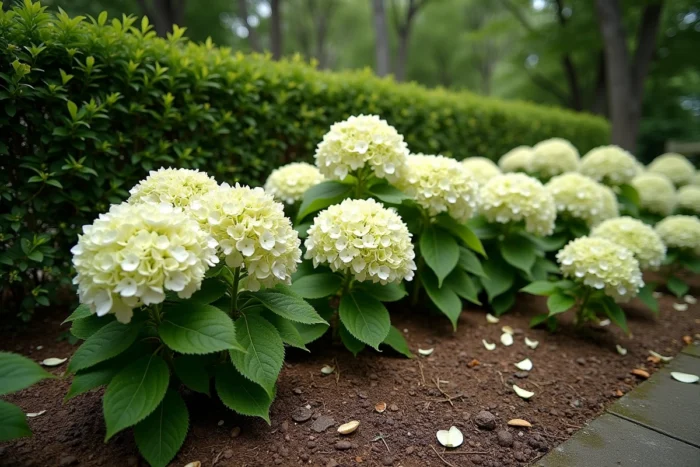
In pots, the problem is amplified. The limited soil volume heats up faster, dries out faster, and concentrates fertilizers. A white hydrangea in a hanging pot exposed to the sun accumulates all the factors for early greening.
- Reduce nitrogen fertilizer input in favor of a balanced or potassium-oriented fertilizer starting from bud formation
- Mulch the surface of the pot or flower bed with several centimeters of bark or compost
- Water in the morning to limit evaporation and maintain stable moisture at the base
- Avoid dark pots that absorb heat and overheat the root system
Should you cut the green flowers of a white hydrangea?
For paniculata varieties that naturally transition from white to green and then to pink, removing the green flowers means missing out on the continuation of the show. It is better to let the cycle run its course.
When the greening results from stress, cutting faded inflorescences releases energy for the plant and prevents the dried sepals from serving as a breeding ground for fungi. Pruning is done just above the first pair of visible buds, without shortening the current year’s shoots that will bear the next bloom.
The timing of pruning depends on the species. A Hydrangea macrophylla blooms on the wood of the previous year: pruning too short in autumn removes the flower buds. A paniculata blooms on the wood of the current year and can withstand more severe pruning at the end of winter. Confusing the two remains the most common cause of total absence of blooming the following year, a problem far more frustrating than simple greening.