Guangzhou is more than just the Canton Tower or the shopping streets of Shangxiajiu. The third largest metropolis in China, also known as Canton, has a layered urban fabric where historic neighborhoods in transformation coexist with enclaves in the business district and a cultural scene driven by locals who organize their own neighborhood events. Exploring this city differently requires understanding what happens in its interstices, where gentrification reshapes daily life.
Those seeking a local experience in Guangzhou will benefit from heading towards these pockets of life that traditional tours bypass.
Urban Villages of Guangzhou: Understanding the City Through Its Enclaves
An urban village (chengzhongcun in Mandarin) refers to an old rural village absorbed by the expansion of the metropolis but retains its network of narrow alleys, dense buildings, and rents significantly lower than the surrounding area. In Guangzhou, these villages are not folkloric remnants. They function as self-sustaining ecosystems where migrant workers, students, and small traders coexist.
Shipai is the largest urban village in Guangzhou. Nestled in the Tianhe CBD, between office towers and shopping malls, it offers a striking contrast. Its closely packed buildings create passages so narrow that daylight barely penetrates. Long-time residents describe Shipai as a place where gentrification is visible to the naked eye, building by building.
Xiaozhou, located further south in the Haizhu district, has followed a different trajectory. This village has transformed into an artists’ quarter with small creative workshops. The outer walls serve as canvases for murals, and several spaces host temporary exhibitions. The village structure, with its canals and low houses, remains discernible beneath the layer of cultural redevelopment.
Exploring these two villages in a day allows one to grasp two faces of urban transformation in Canton: one raw, popular, and functional, the other undergoing gradual aestheticization.
Historic Neighborhoods of Canton: Xiguan and Yongqingfang
Xiguan, in the Liwan district, is the core of traditional Cantonese culture. The term literally means “the west of the gates” of the ancient wall. It is within this perimeter that the characteristic portico houses (qilou) of southern Chinese commercial architecture are concentrated, with their ground-floor arcades and residential upper floors.
The area of Yongqingfang has undergone a rehabilitation that deserves attention. Unlike many Chinese heritage renovations, this one has retained some original residents while integrating cafes, galleries, and craft workshops. The result is a neighborhood that still functions as a living space, not just as a backdrop for visitors.
What distinguishes Xiguan from a museum-like neighborhood is the persistence of visible daily practices:
- Dim sum vendors prepare their steam baskets at dawn in backyards open to the street, using recipes passed down through generations
- Traditional herbal shops sell medicinal teas (liangcha) whose composition varies with the seasons, a practice deeply rooted in Cantonese culture
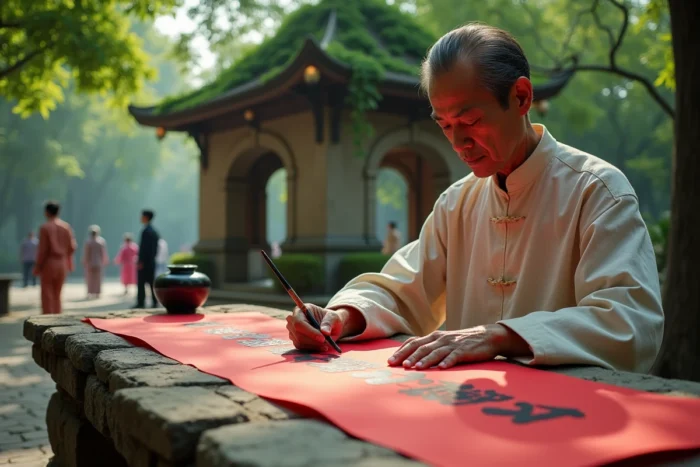
- Guangdong lacquer and embroidery workshops still operate, some open to visitors who wish to observe the manufacturing process
Neighborhood Events and Micro-Experiences Organized by Locals
The cultural scene of Guangzhou is not limited to major festivals. A recent trend has seen the emergence of small-scale community events, organized by locals or local collectives, often announced on Chinese social media (WeChat, Xiaohongshu) rather than on international tourist platforms.
Organizations like Explore Local China offer themed meetups, guided urban walks, or cooking workshops in private apartments. These short formats, often limited to a handful of participants, provide access to Cantonese daily life that group tours cannot replicate.
The interest of these micro-experiences lies in their precise geographical anchoring. A stroll through the Dongshan neighborhood, for example, does not merely showcase the republican villas of the 1920s. It contextualizes their construction by Cantonese who returned from overseas, explains why certain streets bear names in Hakka dialect, and links architecture to the migratory history of the region.
Living Cantonese Culture: Markets, Temples, and Local Nightlife
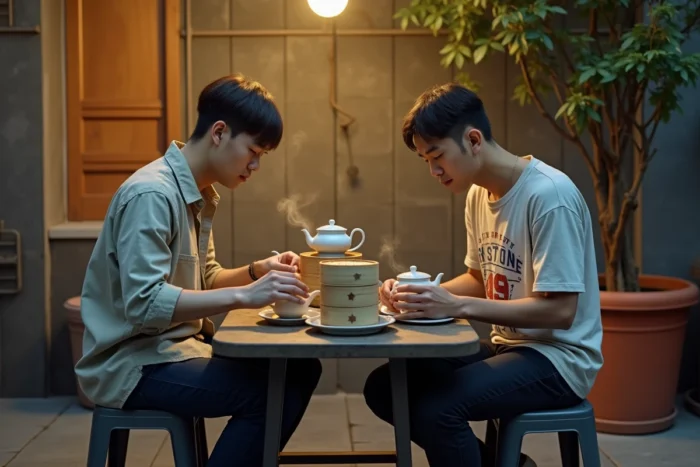
The culture of Guangzhou is as much practiced as it is visited. The yum cha (literally “drink tea”) remains a central social ritual. Cantonese gather early in the morning in noisy tea houses to share dim sum with family or colleagues. Participating in a yum cha at a neighborhood establishment, away from the addresses recommended by guides, gives a concrete idea of the local pace of life.
On the nightlife side, the Zhujiang New Town area and the banks of the Pearl River concentrate an activity that goes beyond cocktail bars. Spontaneous night markets pop up on certain evenings, blending street food, clothing sales, and improvised musical performances.
- The Six Banyan Temple (Liurong Si), active for over a millennium, still hosts regular Buddhist ceremonies that visitors can attend
- The Lingnan Flower Market (Lingnan Huashi) operates daily and reflects the importance of flowers in Cantonese social life, especially around the Chinese New Year
- The alleys around Enning Lu, currently being renovated, house tea rooms where Cantonese music (Yueju) enthusiasts gather for informal sessions
Guangzhou rewards those who are willing to slow down. The city does not reveal its most interesting layers from an air-conditioned bus or from the observation deck of a tower. Its urban villages, transitioning neighborhoods, and daily rituals form a fabric that can only be deciphered through walking and a curiosity for details.